−11%
What's Included
- EGP 7,000
- EGP 2,000
Total valueEGP 9,000
About this bundle
HVAC & Heat Exchanger Professional Bundle
Master HVAC Simulation. Explore Thermal Performance. Optimize Engineering Designs.
Discover the Connection Between HVAC and Thermal Simulation
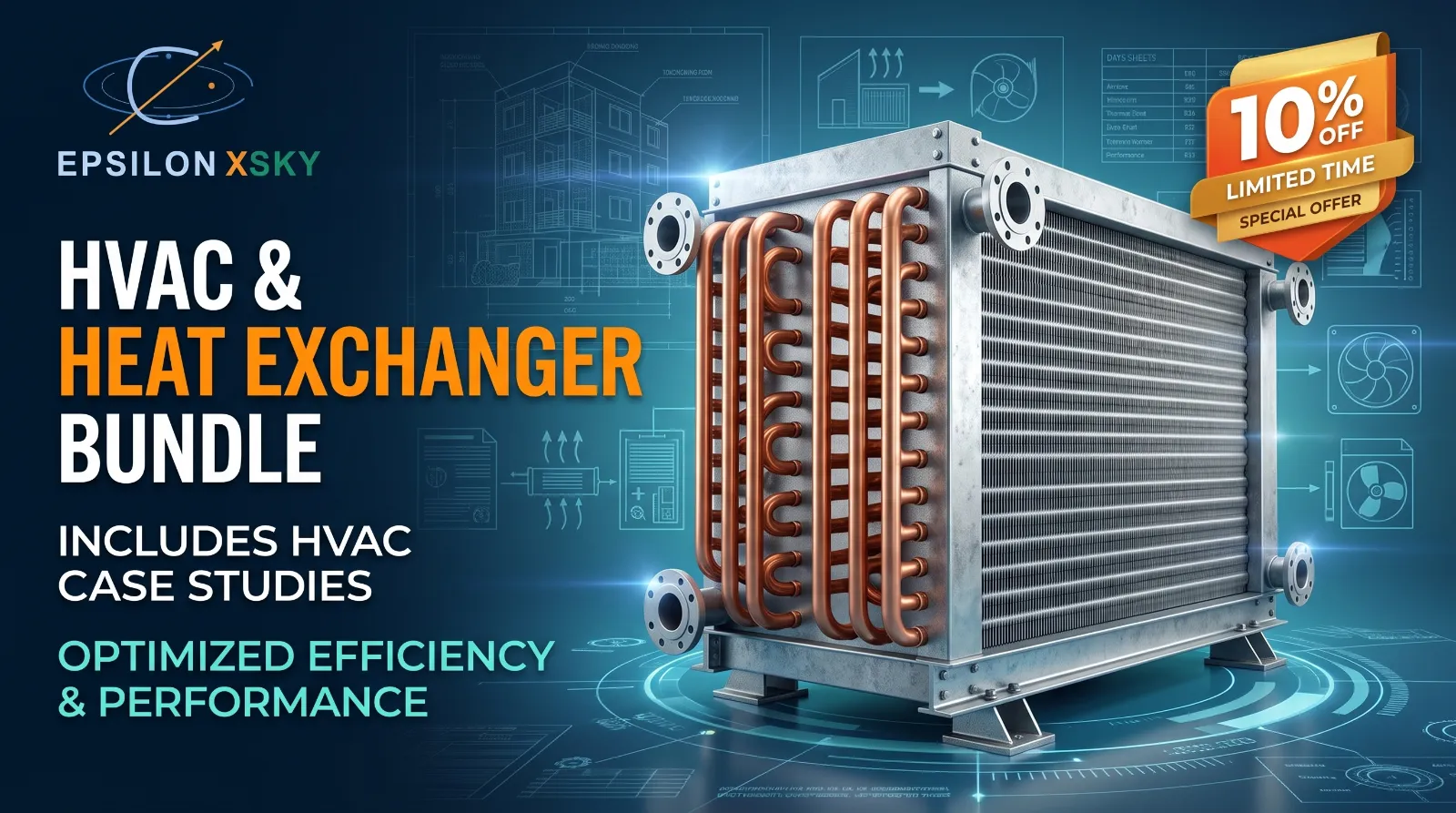
The HVAC & Heat Exchanger Bundle from Epsilon X Sky is designed for engineers who want to develop their knowledge of heating, ventilation, air conditioning, and heat-transfer simulation through practical engineering applications.
This bundle combines Module 10 — HVAC Industrial Case Studies with the Fin & Tube Heat Exchanger HVAC Unit simulation product, connecting specialized training with an applied thermal-fluid engineering case.
Heating, ventilation, and air conditioning systems play an essential role in maintaining comfortable indoor environments, supporting industrial processes, and improving energy efficiency.
Engineering simulation enables designers to investigate airflow behavior, temperature distribution, and heat-transfer performance before implementing physical design changes.
Through this bundle, learners can explore the relationship between HVAC system design and computational fluid dynamics while developing a stronger understanding of thermal engineering principles.
The course provides the broader engineering knowledge, while the heat exchanger project offers a focused application for exploring thermal-fluid behavior.
Develop Your HVAC Expertise with Module 10
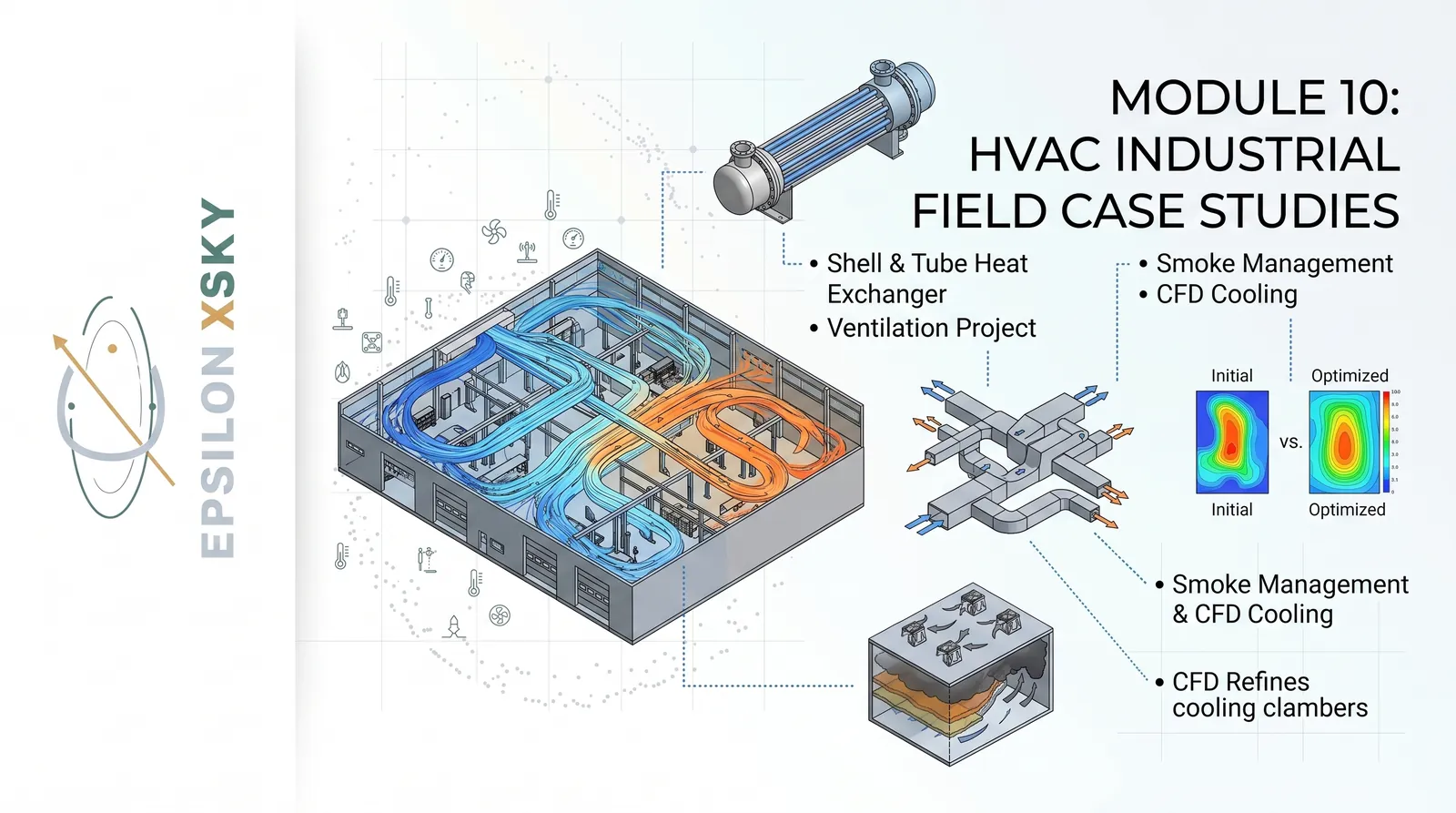
Module 10 — HVAC Industrial Case Studies introduces practical engineering applications related to heating, ventilation, and air conditioning systems.
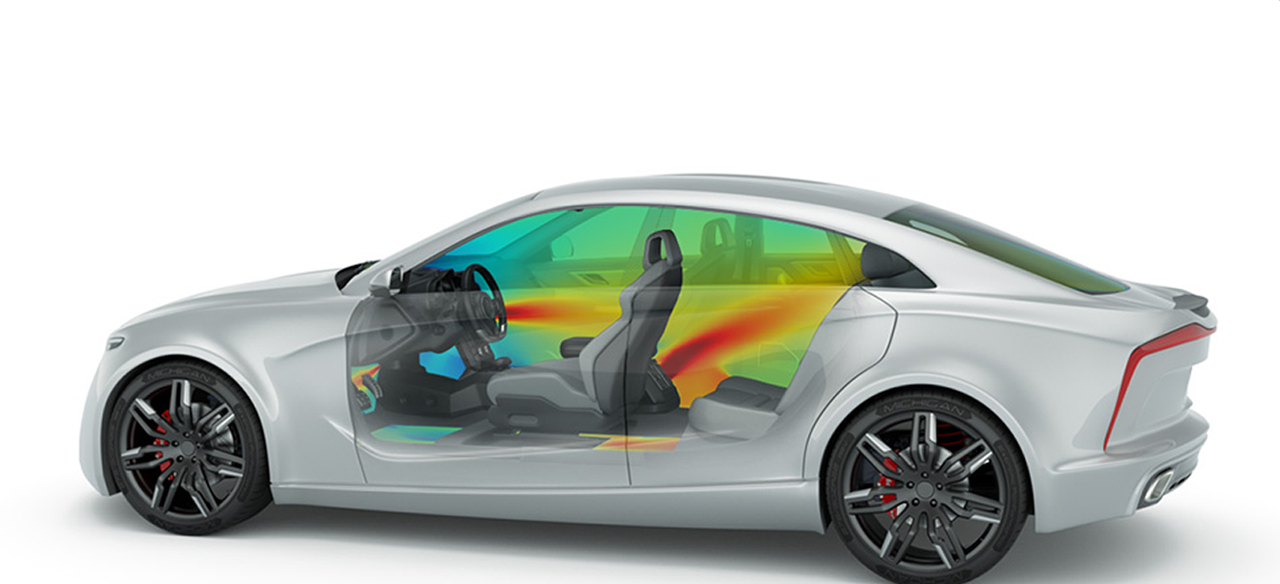
The course explores how computational fluid dynamics can help engineers analyze airflow patterns and thermal behavior in HVAC applications.
Learners develop an understanding of how air distribution influences indoor comfort and system performance.
The training addresses room cooling applications and the investigation of temperature distribution within enclosed spaces.
Participants explore ventilation concepts and the importance of designing effective airflow paths.
The module also covers heat exchanger applications and their role in transferring thermal energy between fluids.
Learners can develop a better understanding of the engineering factors that influence heat-transfer effectiveness and cooling performance.
Smoke management applications introduce the importance of analyzing airflow behavior in environments where smoke extraction and air movement are critical considerations.
Through industrial case studies, the course connects theoretical concepts with practical engineering challenges.
Learners gain insight into how simulation results can support HVAC system evaluation and design decisions.
The course is suitable for mechanical engineers, HVAC specialists, thermal engineers, and engineering students interested in simulation-based analysis.
Apply Your Knowledge with a Practical Heat Exchanger Project
Fin & Tube Heat Exchanger HVAC Unit is the practical simulation product included in this bundle.
The project focuses on a fin-and-tube heat exchanger configuration commonly associated with thermal management and HVAC applications.
It provides an opportunity to connect the concepts learned in the HVAC course with a specific heat-transfer application.
Learners can explore how computational simulation helps investigate the interaction between fluid flow and heat transfer within an engineering system.
The project provides a practical context for understanding thermal-fluid behavior rather than approaching heat exchangers only from a theoretical perspective.
Through this application, learners can develop a clearer understanding of the engineering considerations involved in heat exchanger analysis.
The project complements the HVAC course by connecting broader HVAC principles with a focused thermal-fluid simulation case.
It is particularly relevant to learners interested in heat exchangers, cooling systems, thermal management, and industrial HVAC applications.
What You Can Learn from This Bundle
Understand the role of computational fluid dynamics in HVAC engineering.
Explore the relationship between airflow distribution and thermal performance.
Develop a stronger foundation in HVAC simulation workflows.
Investigate the importance of heat transfer in air-conditioning and cooling systems.
Understand the engineering principles behind fin-and-tube heat exchanger configurations.
Connect thermal-fluid theory with a practical engineering simulation application.
Explore how simulation can support the evaluation of temperature and flow behavior.
Develop a broader perspective on thermal management and energy-related engineering challenges.
Strengthen your ability to interpret simulation results in the context of HVAC design.
Build knowledge that can support further learning in thermal engineering and CFD applications.
Why Choose the HVAC & Heat Exchanger Bundle?
This bundle combines specialized HVAC training with a practical heat exchanger simulation product to create a more connected learning experience.
Instead of studying HVAC concepts and thermal-fluid simulation separately, learners can connect the knowledge from the course with a specific engineering application.
The combination provides a clear learning pathway from understanding HVAC systems to exploring heat-transfer behavior through simulation.
It helps learners appreciate the relationship between fluid mechanics, heat transfer, and engineering performance.
The bundle is suitable for mechanical engineers who want to strengthen their CFD knowledge and HVAC professionals interested in simulation-based analysis.
It can also benefit engineering students who want to connect academic knowledge with practical engineering applications.
For professionals working with cooling equipment and thermal systems, this combination offers a focused opportunity to explore relevant simulation concepts.
Who Should Choose This Bundle?
Mechanical engineers interested in HVAC design and thermal-fluid simulation will find this bundle relevant to their professional development.
HVAC engineers can use the learning pathway to strengthen their understanding of airflow, cooling, and heat exchanger applications.
Thermal engineers can explore the connection between heat-transfer principles and computational analysis.
Engineering students can gain exposure to practical simulation applications that complement their theoretical studies.
Researchers and technical professionals interested in CFD-based thermal analysis can use the bundle as a focused learning resource.
Advance Your HVAC Simulation Skills
Explore the engineering principles behind HVAC systems and apply your knowledge through a dedicated fin-and-tube heat exchanger simulation project.
Develop a stronger understanding of airflow, heat transfer, and thermal-fluid analysis with the Epsilon X Sky HVAC & Heat Exchanger Bundle.
Learn the concepts. Explore the simulation. Connect theory with engineering practice.
Epsilon X Sky — Engineering Simulation. Analysis. Optimization.