−13%
What's Included
- EGP 6,000
- EGP 10,000
- EGP 2,300
Total valueEGP 18,300
About this bundle
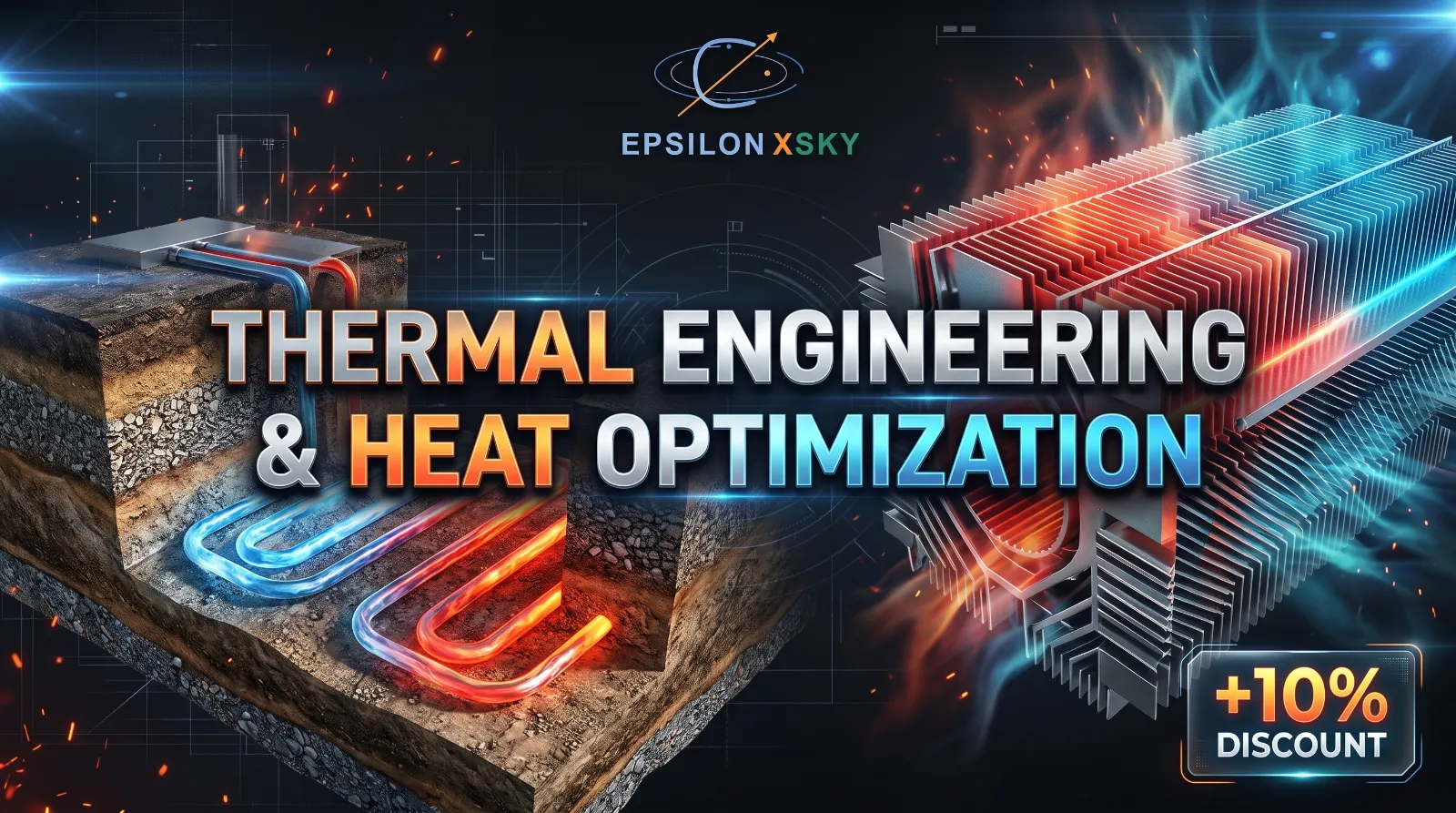
Thermal Engineering & Heat Optimization Bundle
Master Heat Transfer. Analyze Thermal Systems. Optimize Engineering Performance.
Explore the Science of Heat Transfer and Thermal Optimization
The Thermal Engineering & Heat Optimization Bundle from Epsilon X Sky is designed for engineers who want to deepen their understanding of heat transfer and explore practical applications through advanced engineering simulation.
This comprehensive bundle combines Module 16 — Heat Transfer with two practical simulation products: Soil Heat Exchanger Technology and Heat Duct Fin Optimization.
By bringing together specialized training and two complementary engineering applications, the bundle connects fundamental thermal concepts with practical simulation workflows and design optimization challenges.
Heat transfer is central to many engineering systems, including cooling equipment, industrial machinery, energy systems, heat exchangers, and thermal management applications.
Understanding how thermal energy moves through solids and fluids enables engineers to investigate temperature distribution, evaluate heat-transfer performance, and identify opportunities to improve system efficiency.
Computational fluid dynamics and thermal simulation help engineers visualize complex thermal behavior and evaluate different engineering configurations before implementing physical changes.
Through this bundle, learners can explore both the fundamental physics of heat transfer and its application to specialized engineering problems.
Build Your Thermal Engineering Knowledge with Module 16
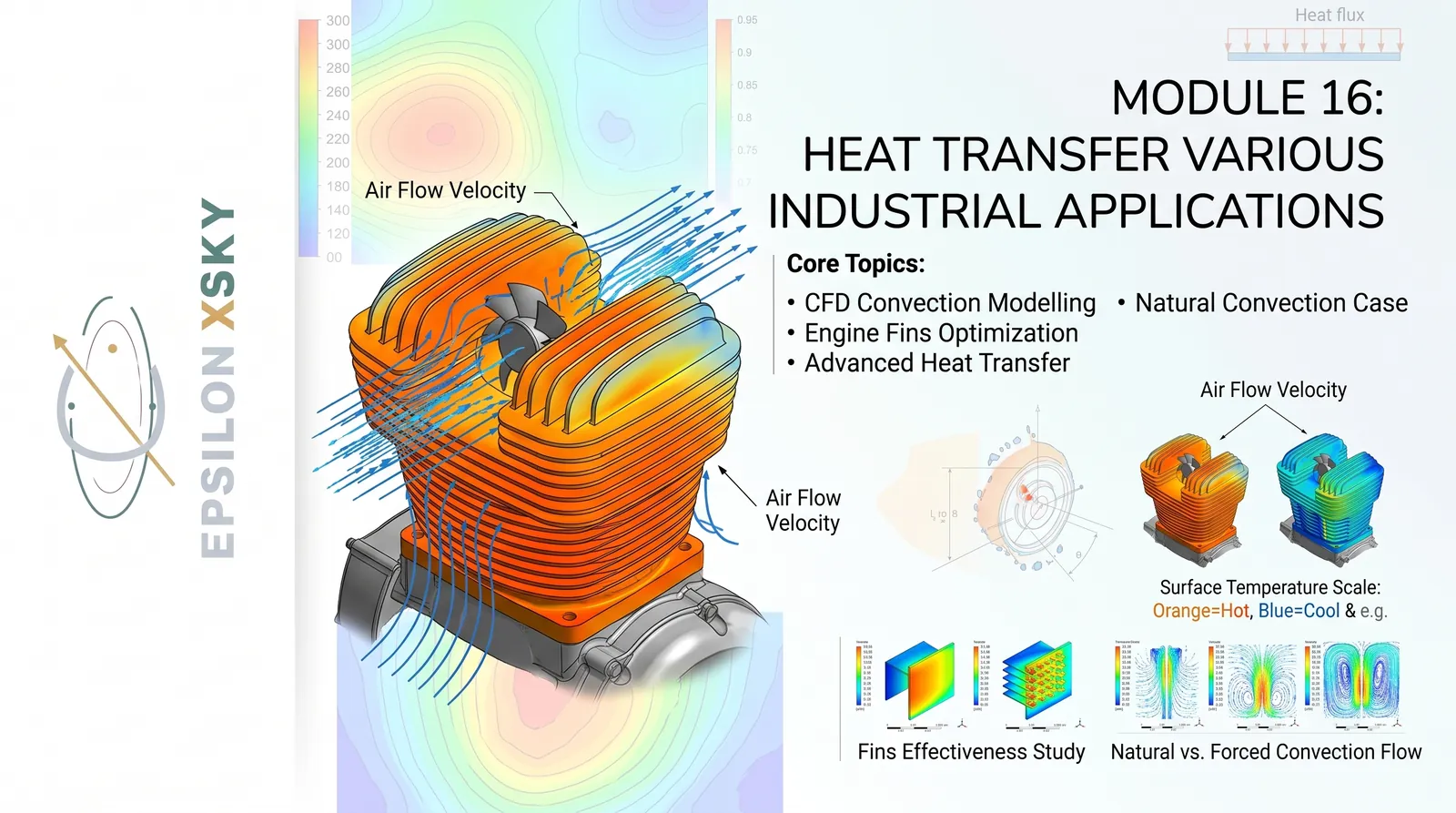
Module 16 — Heat Transfer introduces important thermal engineering principles and their applications in industrial simulation.
The module explores how heat moves through engineering systems and how simulation can be used to investigate temperature distribution and thermal performance.
Learners develop a stronger understanding of convection, heat generation, and the relationship between fluid flow and thermal behavior.
The training explores natural convection and the influence of temperature differences on fluid motion.
Participants investigate how thermal conditions affect the performance of engineering components and industrial equipment.
The module also addresses conjugate heat transfer, where thermal energy moves between fluids and solid materials within the same system.
This topic is particularly important for understanding systems in which heat transfer depends on the interaction between fluid flow, solid conduction, and surrounding thermal conditions.
Learners can connect these concepts with practical applications involving cooling, thermal management, and engineering design.
The module also introduces the role of simulation in evaluating alternative designs and understanding the factors that influence heat-transfer effectiveness.
Through industrial applications, learners develop a more practical perspective on thermal analysis and its relevance to engineering decision-making.
Practical Project One: Soil Heat Exchanger Technology
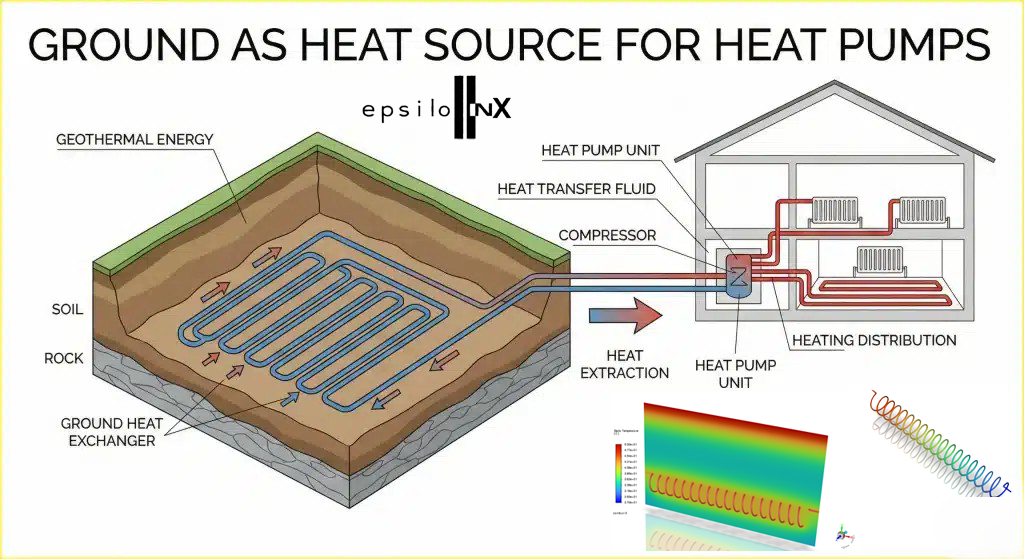
Soil Heat Exchanger Technology provides a practical application for exploring heat transfer between flowing fluid, pipe materials, and the surrounding soil.
Soil-based heat exchange systems use the thermal properties of the ground to exchange energy with a circulating fluid.
Their performance depends on factors such as fluid temperature, flow conditions, pipe characteristics, soil properties, and the surrounding thermal environment.
Through this simulation project, learners can explore the physical principles governing heat exchange between these interacting regions.
The application introduces the concept of conjugate heat transfer, where thermal energy moves between the fluid, the pipe wall, and the surrounding soil.
Learners can develop a stronger understanding of how temperature fields and heat-transfer mechanisms interact within a coupled thermal system.
The project connects the concepts introduced in Module 16 with an engineering application relevant to geothermal systems and energy-efficient thermal management.
It also provides a context for exploring how simulation can support the evaluation of heat exchanger configurations and operating conditions.
For engineers interested in thermal systems and renewable-energy applications, this project offers a focused opportunity to study ground-coupled heat exchange.
Practical Project Two: Heat Duct Fin Optimization
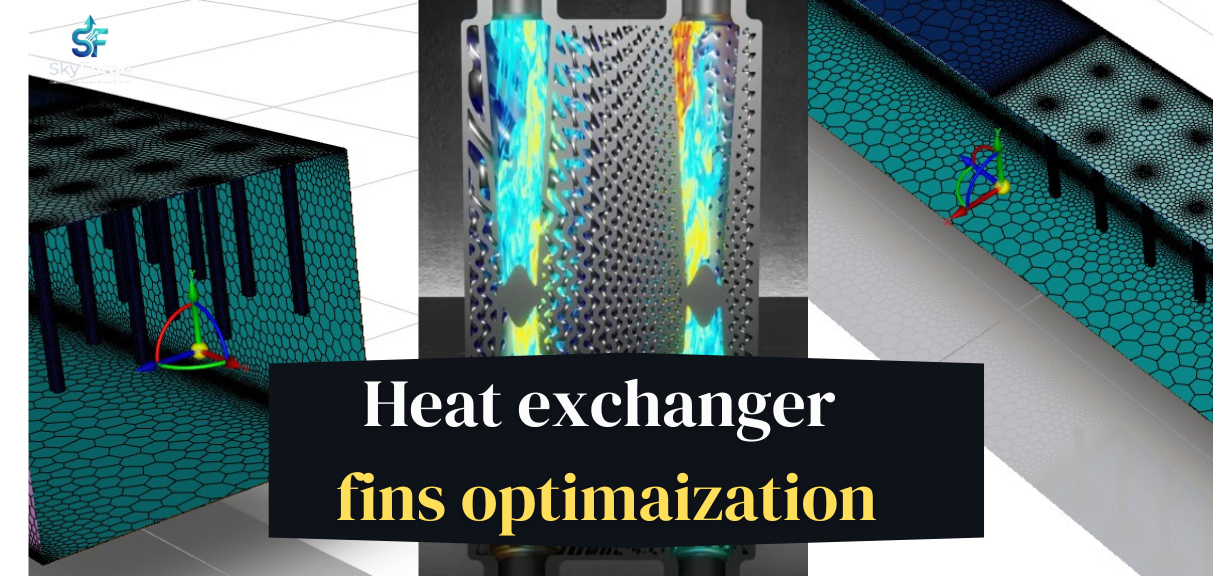
Heat Duct Fin Optimization introduces a complementary application focused on improving thermal performance through engineering design optimization.
Fins are widely used in thermal management systems to increase the surface area available for heat transfer.
Their geometry and arrangement can influence thermal performance, airflow resistance, temperature distribution, and overall system behavior.
Through this project, learners can explore how computational simulation supports the investigation of fin-based heat-transfer designs.
The application connects heat-transfer theory with the engineering challenge of evaluating and improving a thermal component's configuration.
Learners can develop a clearer understanding of how fin geometry and airflow conditions can affect heat dissipation.
The project also introduces a design-oriented perspective on thermal simulation, where engineers investigate how changes in geometry may influence performance.
Rather than focusing only on understanding existing thermal behavior, the optimization aspect encourages learners to consider how simulation can inform design improvements.
This makes the project a valuable complement to Module 16 for engineers interested in thermal management, cooling systems, and performance-driven engineering design.
Two Projects. One Complete Thermal Learning Experience.
The combination of Soil Heat Exchanger Technology and Heat Duct Fin Optimization provides two different perspectives on thermal engineering.
The soil heat exchanger project focuses on heat exchange between fluid, solid pipe materials, and the surrounding ground.
The heat duct fin project focuses on thermal component geometry and the opportunities for improving heat-transfer performance through design optimization.
Together, the projects help learners explore both system-level thermal interactions and component-level design challenges.
The soil heat exchanger provides a broader perspective on coupled thermal behavior across multiple materials.
The fin optimization project introduces a more direct connection between geometry, heat dissipation, and engineering design decisions.
Both applications complement the thermal principles introduced in Module 16.
This combination creates a more varied learning experience by connecting fundamental physics with two distinct engineering simulation scenarios.
What You Can Learn from This Bundle
Develop a stronger understanding of heat transfer and industrial thermal applications.
Explore the relationship between fluid flow and temperature distribution.
Understand the principles of convection and conjugate heat transfer.
Investigate thermal interactions between fluids, solid materials, and surrounding environments.
Explore the thermal behavior of soil heat exchanger systems.
Understand how soil and pipe properties may influence heat exchange.
Examine the role of fin geometry in thermal management applications.
Discover how simulation can support the evaluation of alternative engineering designs.
Explore the relationship between thermal performance and design optimization.
Develop a broader perspective on CFD-based thermal analysis.
Connect theoretical heat-transfer concepts with practical engineering projects.
Strengthen your knowledge of simulation-based engineering evaluation and design improvement.
Who Should Choose This Bundle?
Mechanical engineers interested in heat transfer and thermal simulation can use this bundle to strengthen their understanding of practical thermal engineering applications.
Thermal engineers can explore conjugate heat transfer, heat exchanger behavior, and fin-based cooling concepts within a connected learning pathway.
Energy engineers can investigate ground-coupled heat exchange and its relationship to energy-system performance.
HVAC professionals can expand their knowledge of thermal management and heat-transfer analysis.
Engineering students can connect their theoretical understanding of thermodynamics and fluid mechanics with applied simulation examples.
Researchers and simulation specialists can explore different thermal engineering scenarios and develop a broader understanding of computational thermal analysis.
Why Choose the Thermal Engineering & Heat Optimization Bundle?
This bundle brings together a specialized heat-transfer course and two complementary simulation projects in one learning package.
It provides a structured pathway from understanding thermal physics to examining practical engineering systems and investigating design improvements.
The combination of soil heat exchange and fin optimization exposes learners to different thermal mechanisms and engineering objectives.
It encourages learners to consider how simulation can be used to understand existing designs, compare configurations, and identify potential opportunities for improved performance.
The bundle is suitable for engineers who want to strengthen their technical knowledge while exploring practical thermal simulation applications.
It also provides a useful foundation for further learning in CFD, energy systems, heat exchangers, and thermal management.
Advance Your Thermal Simulation Skills with Epsilon X Sky
Explore the science of heat transfer, investigate soil heat exchanger technology, and discover how fin optimization contributes to thermal engineering design.
Connect fundamental principles with practical simulation applications and develop a more comprehensive understanding of thermal performance and engineering optimization.
Learn the physics. Analyze the system. Optimize the design.
Explore the Thermal Engineering & Heat Optimization Bundle at Epsilon X Sky and take the next step in your engineering simulation journey.
Epsilon X Sky — Engineering Simulation. Analysis. Optimization.