Finite Element Analysis (FEA)
The Science Behind Smarter Engineering Design
Every engineered product, regardless of its size or complexity, is subjected to forces throughout its service life. Whether it is a bridge carrying thousands of vehicles each day, an aircraft wing resisting aerodynamic loads at high altitude, a pressure vessel operating under extreme internal pressure, or a simple mounting bracket supporting industrial equipment, every structure must safely withstand the mechanical and environmental conditions for which it was designed. Predicting how these structures behave before they are manufactured has become one of the greatest challenges—and one of the most important achievements—of modern engineering.
Finite Element Analysis (FEA) is a powerful numerical simulation technique that enables engineers to accurately predict the structural, thermal, dynamic, and multiphysics behavior of components, assemblies, and complete engineering systems under real-world operating conditions. Instead of relying solely on costly physical prototypes, extensive experimental testing, or simplified analytical calculations, FEA allows engineers to evaluate virtual models with exceptional accuracy, providing valuable insights into product performance long before manufacturing begins.
At the heart of the Finite Element Method lies a simple yet revolutionary concept. Rather than attempting to solve an entire engineering problem at once, a complex geometry is divided into thousands—or even millions—of smaller interconnected elements. Each element represents a small portion of the physical structure and follows the governing equations of continuum mechanics. These individual solutions are mathematically assembled into a global system capable of predicting how the complete structure responds to external loads, thermal effects, vibrations, impacts, pressure, contact interactions, and numerous other physical phenomena.
This computational approach has fundamentally transformed engineering design. Modern industries no longer depend exclusively on trial-and-error development or repeated physical testing. Instead, engineers perform virtual experiments that replicate real operating environments, allowing them to evaluate multiple design concepts, optimize material usage, identify potential failure locations, improve product reliability, and significantly reduce development costs before the first prototype is ever produced.
Today, Finite Element Analysis has become one of the most indispensable technologies in Computer-Aided Engineering (CAE). It plays a critical role in industries ranging from automotive, aerospace, renewable energy, civil engineering, oil and gas, heavy machinery, and manufacturing to biomedical devices, robotics, marine engineering, consumer electronics, defense systems, and space exploration. Regardless of the application, the objective remains the same: to understand how a product behaves under realistic operating conditions and ensure that it performs safely, efficiently, and reliably throughout its intended lifetime.

Unlike traditional engineering calculations that are often limited to idealized geometries and simplified assumptions, Finite Element Analysis enables engineers to investigate highly complex designs with intricate geometries, nonlinear material behavior, multiple contact interfaces, large deformations, and coupled physical phenomena. Modern simulation software can simultaneously evaluate structural stresses, elastic and plastic deformation, thermal expansion, fatigue life, vibration characteristics, buckling stability, fracture behavior, composite material performance, and fluid-structure interactions within a unified computational environment.
The continuous advancement of computing technology has further expanded the capabilities of FEA. High-performance computing, cloud simulation, advanced numerical solvers, optimization algorithms, and digital twin technologies now allow engineers to analyze engineering systems containing millions of degrees of freedom with unprecedented accuracy and efficiency. As industries move toward Industry 4.0, smart manufacturing, and digital engineering workflows, Finite Element Analysis has evolved from a specialized research tool into an essential component of modern product development.
However, successful simulation is not simply about generating colorful contour plots or running sophisticated software. Reliable engineering simulation requires a thorough understanding of mechanics, material behavior, numerical methods, boundary conditions, mesh quality, contact interactions, solver technologies, and engineering judgment. The accuracy of any simulation depends not only on the computational capabilities of the software but also on the engineer's ability to construct an appropriate mathematical model that accurately represents the real physical system.
For this reason, Finite Element Analysis should always be viewed as an engineering decision-making tool rather than a replacement for engineering experience. It provides the insight necessary to understand why components fail, how designs can be improved, where material can be removed without compromising safety, how operating conditions influence structural integrity, and which design alternatives offer the greatest balance between performance, reliability, manufacturability, and cost.
Our FEA Shop has been developed to serve as a comprehensive engineering resource for professionals, researchers, students, manufacturers, and organizations seeking high-quality structural simulation solutions using the ANSYS simulation ecosystem. More than simply offering engineering services, this platform aims to provide a deep understanding of the science behind Finite Element Analysis while delivering practical simulation solutions applicable to real industrial challenges.

Within this knowledge center, you will explore the complete spectrum of structural simulation, from the fundamental principles of solid mechanics and the mathematical foundations of the Finite Element Method to advanced nonlinear analyses, fatigue life prediction, impact simulation, thermal analysis, vibration studies, topology optimization, composite structures, and multiphysics engineering. Every topic is presented with the objective of helping engineers understand not only how a simulation is performed, but more importantly why specific methods are used, when they should be applied, and how simulation results should be interpreted to support confident engineering decisions.
Whether you are validating a new product design, optimizing an existing structure, investigating the cause of a structural failure, reducing product weight, extending fatigue life, improving thermal performance, or exploring innovative engineering concepts, Finite Element Analysis provides the scientific foundation that transforms engineering ideas into reliable, efficient, and manufacturable products.

At epsilonX, we believe that engineering simulation is more than software—it is the language through which engineers understand the physical world. By combining advanced numerical methods, deep engineering expertise, and the powerful capabilities of ANSYS Mechanical and its associated simulation technologies, we help bridge the gap between imagination and reality, enabling the next generation of smarter, safer, and more innovative engineering solutions.

The Evolution of Finite Element Analysis
The concept of predicting structural behavior through mathematical modeling predates the digital computer by many decades. Early engineers such as Euler, Bernoulli, Navier, and Cauchy established the foundations of elasticity, structural mechanics, and continuum mechanics during the eighteenth and nineteenth centuries. Their analytical solutions enabled engineers to calculate stresses and deflections for relatively simple structures, laying the groundwork for modern structural engineering.
As engineering designs became increasingly sophisticated during the twentieth century, analytical methods alone could no longer address the complexity of practical problems. Aircraft structures, rocket propulsion systems, nuclear reactors, automotive chassis, offshore platforms, and large civil infrastructures introduced geometries and loading conditions far beyond the capabilities of classical equations. Engineers required a numerical technique capable of solving systems that contained millions of interacting variables while maintaining acceptable computational accuracy.
The earliest concepts of the Finite Element Method emerged during the 1940s and 1950s through research conducted in structural mechanics and aerospace engineering. Scientists recognized that a complex structure could be divided into many smaller regions, each represented by relatively simple mathematical equations. By assembling these individual regions into a larger system, engineers could approximate the behavior of the complete structure with remarkable precision.
The rapid advancement of digital computing during the 1960s transformed the Finite Element Method from an academic concept into a practical engineering tool. Aerospace organizations, government research laboratories, and major universities pioneered computational techniques that dramatically expanded the complexity of problems engineers could solve. As computing power continued to increase, commercial finite element software became available to industries around the world, allowing engineers to integrate simulation directly into product development workflows.
Today, modern FEA software combines advanced numerical algorithms, sophisticated material models, automatic mesh generation, nonlinear solution techniques, optimization algorithms, and cloud computing to analyze engineering systems containing millions of degrees of freedom. What once required weeks of computation on specialized supercomputers can now often be completed within hours on modern engineering workstations.

The evolution of Finite Element Analysis reflects the broader transformation of engineering itself—from traditional trial-and-error development toward simulation-driven design, digital twins, and virtual product validation. As artificial intelligence, high-performance computing, and cloud-based simulation continue to evolve, the role of FEA is expanding beyond design verification to support predictive maintenance, autonomous optimization, real-time digital twins, and next-generation engineering innovation.A Comprehensive Engineering Simulation Ecosystem
Engineering simulation has evolved far beyond simple stress calculations. Modern products are expected to withstand complex loading conditions, operate under extreme temperatures, survive millions of loading cycles, resist impact events, maintain structural integrity under vibration, and interact with multiple physical phenomena simultaneously. No single numerical solver can efficiently address every engineering challenge while maintaining the highest level of computational accuracy and efficiency.
To meet these demands, ANSYS has developed one of the world's most comprehensive engineering simulation ecosystems, providing specialized software modules tailored to different engineering disciplines and analysis methodologies. Rather than relying on a single solver for every application, the ANSYS platform integrates multiple simulation technologies, each optimized to solve a specific class of engineering problems. This modular approach allows engineers to select the most appropriate numerical method based on the physics involved, the complexity of the model, and the desired level of accuracy.
From linear static stress analysis to highly nonlinear impact simulations, from fatigue life prediction to topology optimization and composite material design, the ANSYS ecosystem provides a complete digital engineering workflow that supports every stage of product development. Engineers can seamlessly move between geometry preparation, structural simulation, material characterization, optimization, reliability assessment, and design validation while maintaining a unified simulation environment.
Each ANSYS module has been developed to address unique engineering challenges. Some modules focus on structural mechanics, while others specialize in explicit dynamics, composite structures, motion analysis, fatigue prediction, optimization, or electronics reliability. Together, they create a powerful engineering platform capable of simulating virtually every structural phenomenon encountered in modern engineering.
The following sections introduce the primary ANSYS modules used in Finite Element Analysis and explain how each contributes to the design, validation, optimization, and certification of engineering products across a wide range of industries.
ANSYS Mechanical
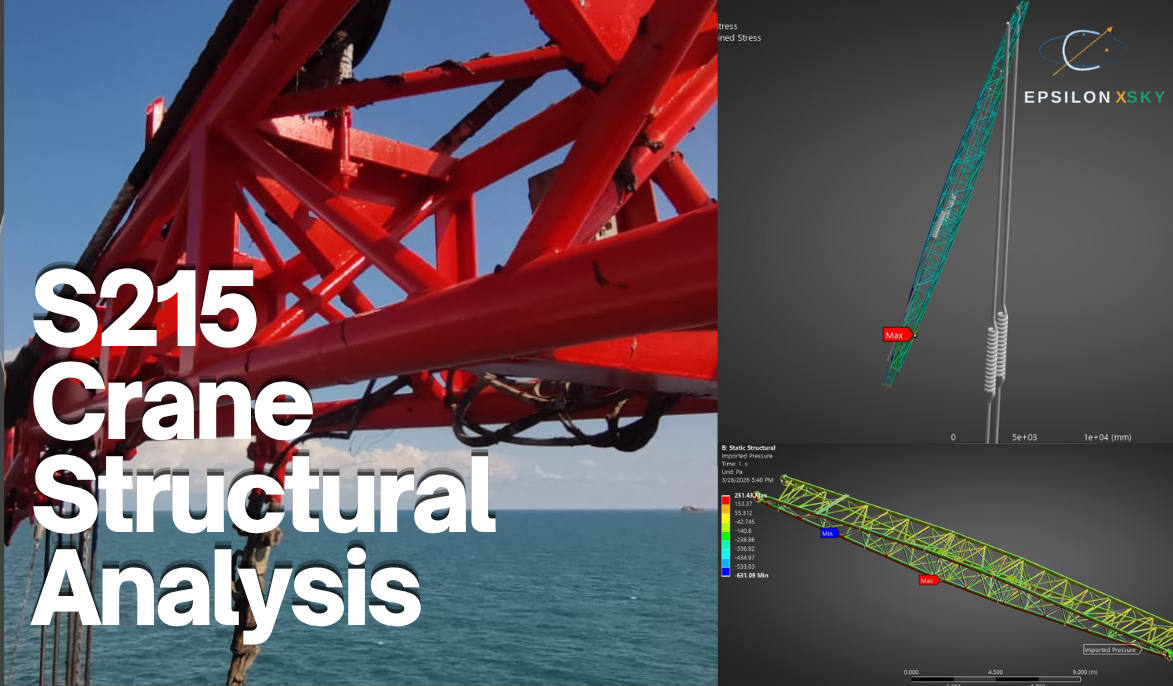
ANSYS Mechanical is the cornerstone of structural simulation within the ANSYS ecosystem and serves as one of the most widely adopted finite element analysis platforms in the engineering industry. Built on advanced finite element formulations and highly efficient numerical solvers, it enables engineers to investigate the structural behavior of components and assemblies under a broad spectrum of loading conditions.
Using ANSYS Mechanical, engineers can perform linear and nonlinear structural analyses, modal analysis, harmonic response, random vibration, buckling, transient structural simulations, thermal stress evaluation, contact analysis, fracture mechanics, and coupled multiphysics simulations. The software combines powerful computational capabilities with an intuitive graphical environment, allowing engineers to build highly detailed simulation models while maintaining complete control over material properties, mesh quality, contact interactions, and solver settings.
Its flexibility makes ANSYS Mechanical suitable for applications ranging from simple mechanical components to highly sophisticated aerospace structures, industrial machinery, medical devices, renewable energy systems, civil infrastructure, and advanced manufacturing equipment.
ANSYS LS-DYNA
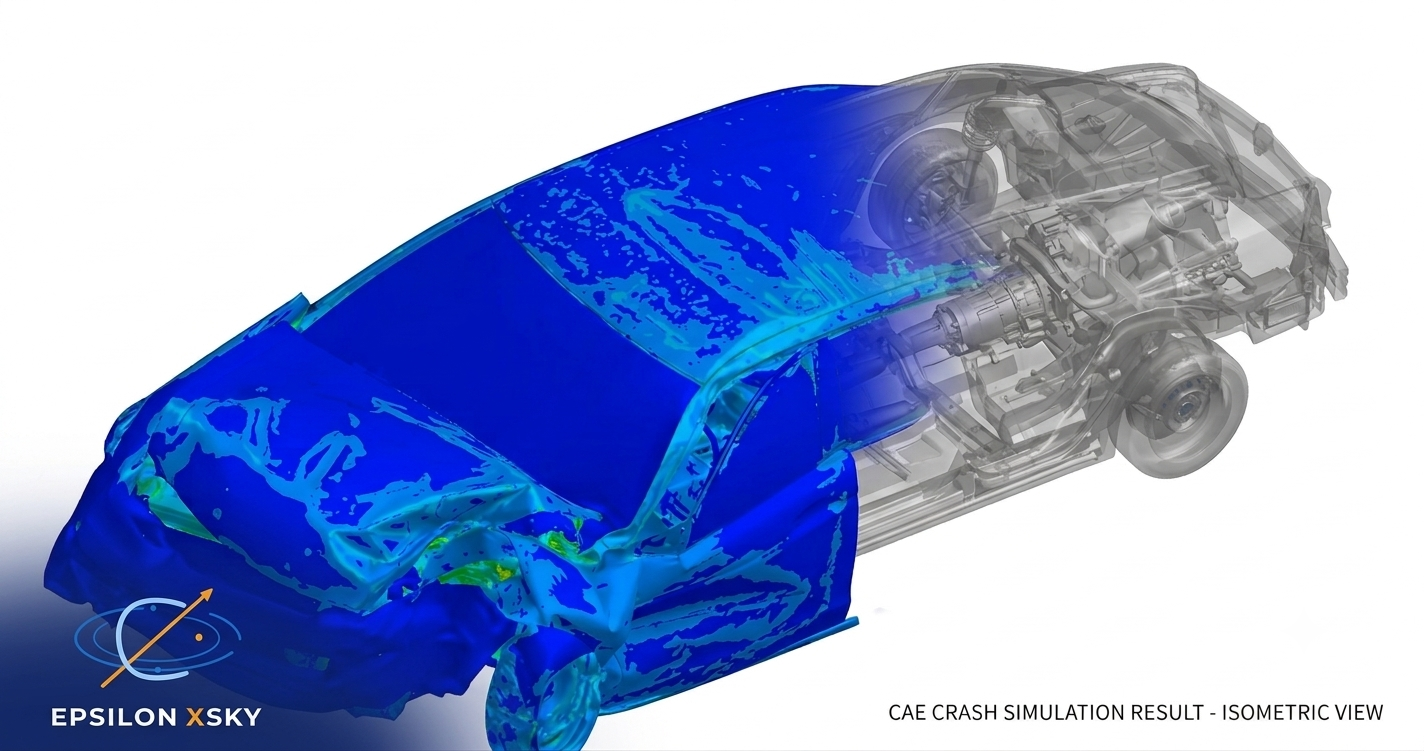
Many engineering problems involve events that occur within milliseconds yet produce enormous structural deformation and material failure. Automotive crashes, ballistic impacts, metal forming, explosive loading, drop tests, and high-speed collisions cannot be accurately represented using conventional static or implicit solution techniques.
ANSYS LS-DYNA is a highly advanced explicit dynamics solver specifically developed to simulate these extreme transient events. By solving highly nonlinear problems involving large deformation, material fracture, contact separation, and rapidly changing boundary conditions, LS-DYNA enables engineers to understand how products behave under severe impact scenarios that would otherwise require extensive experimental testing.
Today, LS-DYNA has become the industry standard for crashworthiness analysis, occupant safety, military protection systems, aerospace impact studies, packaging validation, and manufacturing simulations where material behavior changes dramatically during deformation.
ANSYS ACP (Composite PrepPost)
Composite materials have transformed modern engineering by offering exceptional strength-to-weight ratios compared to conventional metals. However, their layered construction introduces unique mechanical behaviors that require specialized simulation techniques.
ANSYS Composite PrepPost (ACP) is dedicated to the design and analysis of laminated composite structures. Engineers can define fiber orientations, stacking sequences, ply materials, core configurations, and manufacturing parameters while accurately predicting stiffness, failure modes, delamination, and structural performance.
ACP is widely used in aerospace, motorsports, renewable energy, marine engineering, and advanced manufacturing industries where lightweight composite structures play a critical role in improving performance and efficiency.
ANSYS Motion
Many engineering systems consist of moving mechanical assemblies whose structural performance depends on realistic kinematic and dynamic interactions. Suspension systems, robotic mechanisms, gear trains, industrial machinery, electric actuators, and vehicle steering systems all involve complex multibody motion that influences structural loading.
ANSYS Motion provides a physics-based multibody dynamics environment capable of simulating rigid and flexible body motion while accounting for joints, contacts, springs, dampers, actuators, friction, and external forces. Instead of prescribing simplified loading conditions, engineers can obtain realistic forces generated by actual system motion and transfer these loads directly into structural analyses for improved accuracy.
By combining motion simulation with finite element analysis, engineers gain a much deeper understanding of real operating conditions and improve the reliability of structural predictions.
ANSYS nCode DesignLife
While many products successfully survive their maximum loading conditions, they often fail after repeated cyclic loading due to fatigue. Components subjected to vibration, rotation, thermal cycling, or fluctuating stresses gradually accumulate microscopic damage that eventually leads to crack initiation and structural failure.
ANSYS nCode DesignLife specializes in fatigue and durability analysis by estimating the service life of engineering components under realistic operating conditions. Using stress or strain histories obtained from finite element simulations, the software predicts fatigue damage accumulation, identifies critical failure locations, and estimates remaining useful life using internationally recognized fatigue methodologies.
This capability enables engineers to improve durability, optimize maintenance schedules, and reduce unexpected failures in automotive, aerospace, railway, heavy equipment, and industrial machinery applications.
ANSYS DesignXplorer
Modern engineering is no longer limited to verifying whether a design works; engineers seek to identify the best possible design among thousands of alternatives. Product performance often depends on multiple interacting parameters such as material selection, wall thickness, geometry, loading conditions, and manufacturing constraints.
ANSYS DesignXplorer provides advanced parametric optimization and design exploration capabilities that automatically evaluate numerous design configurations using optimization algorithms and response surface methodologies. Engineers can investigate design sensitivity, optimize weight, maximize stiffness, minimize stress concentrations, and evaluate manufacturing trade-offs while significantly reducing development time.
By integrating simulation with optimization, DesignXplorer transforms Finite Element Analysis from a verification tool into a powerful design improvement methodology.
ANSYS SpaceClaim
Accurate simulation begins with high-quality geometry. Engineering models imported from various CAD systems frequently contain gaps, overlapping surfaces, missing faces, unnecessary details, or complex features that increase computational cost without improving simulation accuracy.
ANSYS SpaceClaim provides a powerful direct modeling environment specifically designed to prepare geometry for simulation. Engineers can simplify CAD models, repair defective geometry, extract midsurfaces, generate beam representations, remove unnecessary features, and prepare complex assemblies for efficient finite element meshing.
Geometry preparation often represents one of the most important stages of the simulation workflow, making SpaceClaim an essential component of efficient engineering analysis.
ANSYS Discovery
During the early stages of product development, engineers often need immediate feedback while exploring multiple design concepts. Waiting for detailed finite element models may slow innovation and reduce design flexibility.
ANSYS Discovery bridges this gap by providing real-time simulation capabilities that allow engineers to visualize structural behavior, thermal performance, and fluid flow while modifying geometry interactively. This enables rapid concept evaluation before transitioning to high-fidelity analyses within the broader ANSYS ecosystem.
Discovery supports simulation-driven design by allowing engineering decisions to be made much earlier in the product development process.
A Unified Engineering Workflow
One of the greatest strengths of the ANSYS ecosystem is not simply the individual capabilities of each software module, but the seamless integration between them. A typical engineering project may begin by preparing geometry in SpaceClaim, continue with structural analysis in ANSYS Mechanical, evaluate fatigue life using nCode DesignLife, optimize the design through DesignXplorer, investigate impact performance using LS-DYNA, analyze composite laminates with ACP, and finally validate system motion through ANSYS Motion. Because these tools share a common simulation environment, engineers can exchange data efficiently without rebuilding models or repeating significant portions of the workflow.
This integrated approach enables simulation-driven product development, where every engineering decision is supported by physics-based analysis rather than assumptions. The result is faster innovation, reduced development costs, improved product reliability, and greater confidence in engineering performance before manufacturing begins.onclusion
Finite Element Analysis has fundamentally transformed the way modern engineering products are conceived, designed, and validated. By replacing costly trial-and-error development with physics-based virtual simulation, engineers can explore innovative concepts, optimize product performance, predict structural behavior, and identify potential failures long before manufacturing begins. From evaluating the smallest mechanical component to analyzing large-scale industrial systems, FEA has become an indispensable tool for delivering safer, lighter, stronger, and more efficient engineering solutions.
As engineering challenges continue to evolve, the demand for accurate, reliable, and high-fidelity simulation becomes increasingly important. Advances in computational methods, material modeling, high-performance computing, and multiphysics simulation are enabling engineers to solve problems that were once considered impossible. However, achieving meaningful simulation results requires far more than powerful software—it demands a deep understanding of engineering principles, numerical methods, material behavior, and practical design experience.
At epsilonX Sky, we believe that engineering simulation is more than a validation process; it is a strategic tool for innovation. Our mission is to bridge the gap between theoretical engineering and practical product development by combining advanced ANSYS simulation technologies with real-world engineering expertise. Whether supporting research institutions, startups, manufacturers, or global industries, we provide simulation-driven solutions that help transform ideas into reliable, optimized, and manufacturable products.
Beyond delivering professional engineering services, epsilonX Sky is committed to building a comprehensive engineering knowledge platform where students, researchers, and industry professionals can deepen their understanding of Computational Engineering, Finite Element Analysis, Computational Fluid Dynamics, Artificial Intelligence, and Digital Engineering. By sharing practical knowledge, advanced simulation methodologies, and real engineering insights, we aim to empower the next generation of innovators while supporting today's engineers in solving tomorrow's challenges.
Whether your objective is to validate a new design, optimize an existing product, reduce development costs, investigate structural failures, or explore advanced simulation methodologies, epsilonX Sky provides the expertise, technology, and engineering insight needed to move confidently from concept to reality. Through the power of simulation-driven engineering, we help organizations accelerate innovation, improve product reliability, and build the intelligent engineering solutions that define the future.