−11%
What's Included
- EGP 5,000
- EGP 15,000
- EGP 8,000
Total valueEGP 28,000
About this bundle
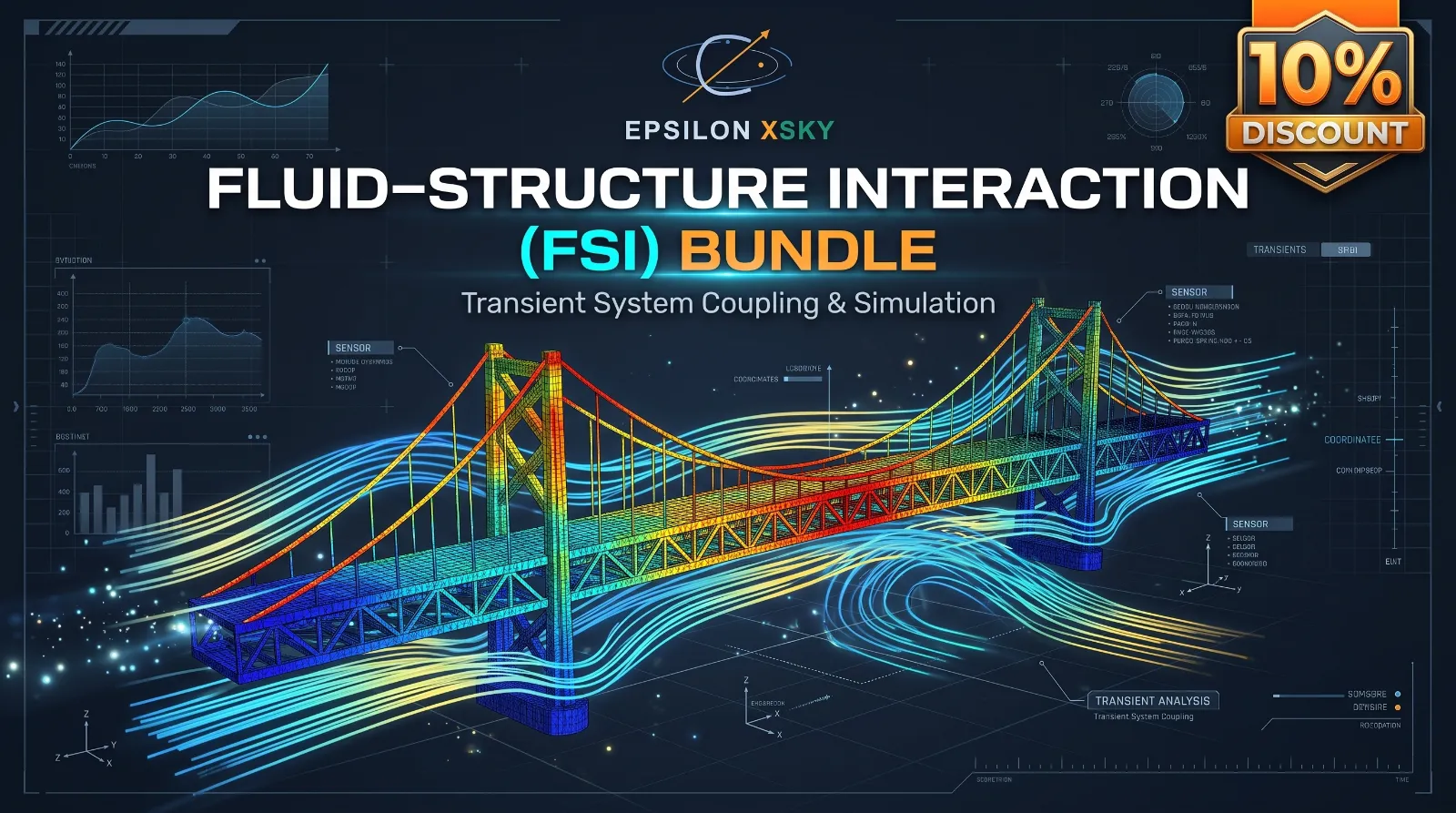
Fluid–Structure Interaction (FSI) Professional Bundle
Understand Coupled Physics. Analyze Complex Engineering Systems.
Discover the Power of Coupled Simulation
The Fluid–Structure Interaction (FSI) Bundle from Epsilon X Sky is designed for engineers who want to explore the relationship between fluid flow and structural mechanics through advanced engineering simulation.
This bundle combines Module 6 — FSI Industrial Cases with a practical engineering simulation project to connect specialized training with real engineering applications.
Fluid–Structure Interaction occurs when fluid forces influence the behavior of a structure and the resulting structural deformation affects the surrounding fluid flow.
Understanding this interaction is essential when analyzing engineering systems in which fluid forces and structural response cannot be evaluated independently.
Through coupled simulation, engineers can investigate complex physical interactions and gain deeper insights into system performance.
The bundle introduces practical applications of multiphysics simulation using ANSYS-based engineering workflows.
It helps learners understand how computational fluid dynamics and structural mechanics can work together to address challenging engineering problems.
Build Your FSI Knowledge with Module 6
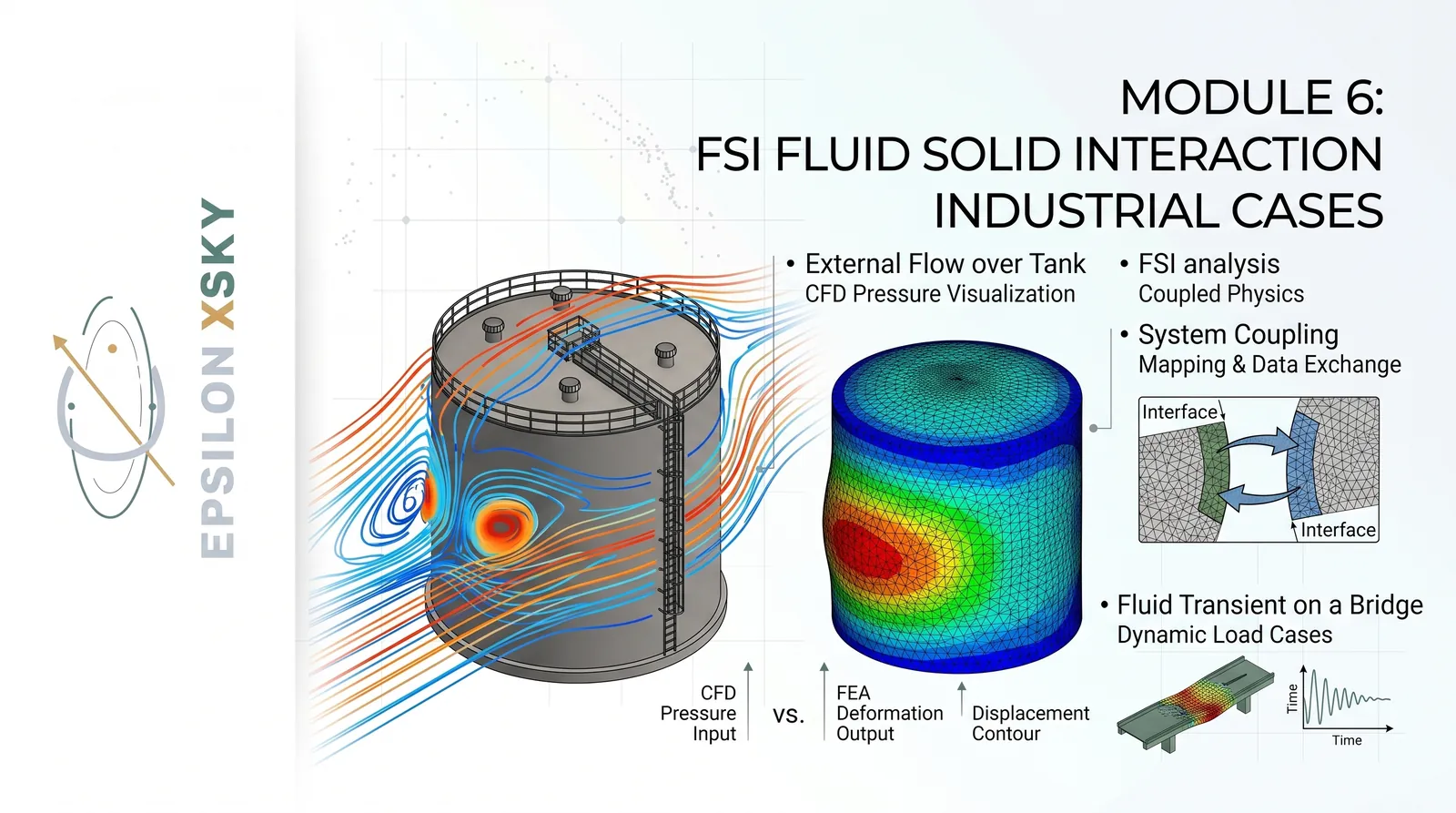
Module 6 — FSI Industrial Cases introduces the principles and practical applications of Fluid–Structure Interaction in engineering simulation.
The course explores how fluid pressure, flow behavior, and structural deformation can influence one another in coupled physical systems.
Learners develop a stronger understanding of fluid-to-structure load transfer and the relationship between aerodynamic or hydrodynamic forces and structural response.
The training introduces industrial FSI applications that demonstrate the importance of considering multiple interacting physical phenomena.
Participants explore how coupled simulation can be used to investigate engineering behavior that may be difficult to assess through isolated analyses.
The course also addresses transient System Coupling applications, helping learners understand how physical interactions can evolve over time.
Learners gain insight into the importance of defining appropriate model conditions and selecting suitable simulation approaches.
The course connects theoretical concepts with practical engineering scenarios to support a more structured understanding of coupled analysis.
It is relevant to engineers interested in CFD, finite element analysis, multiphysics simulation, and advanced numerical modeling.
By completing the course, learners can strengthen the knowledge needed to approach FSI problems with a more systematic engineering perspective.
Apply Your Learning Through a Practical Project
After exploring the course material, select the simulation project that best aligns with your engineering interests and professional goals.
The bundle offers two project options, each connecting FSI concepts to a different engineering application.
Project Option One: Bridge Transient System Coupling FSI
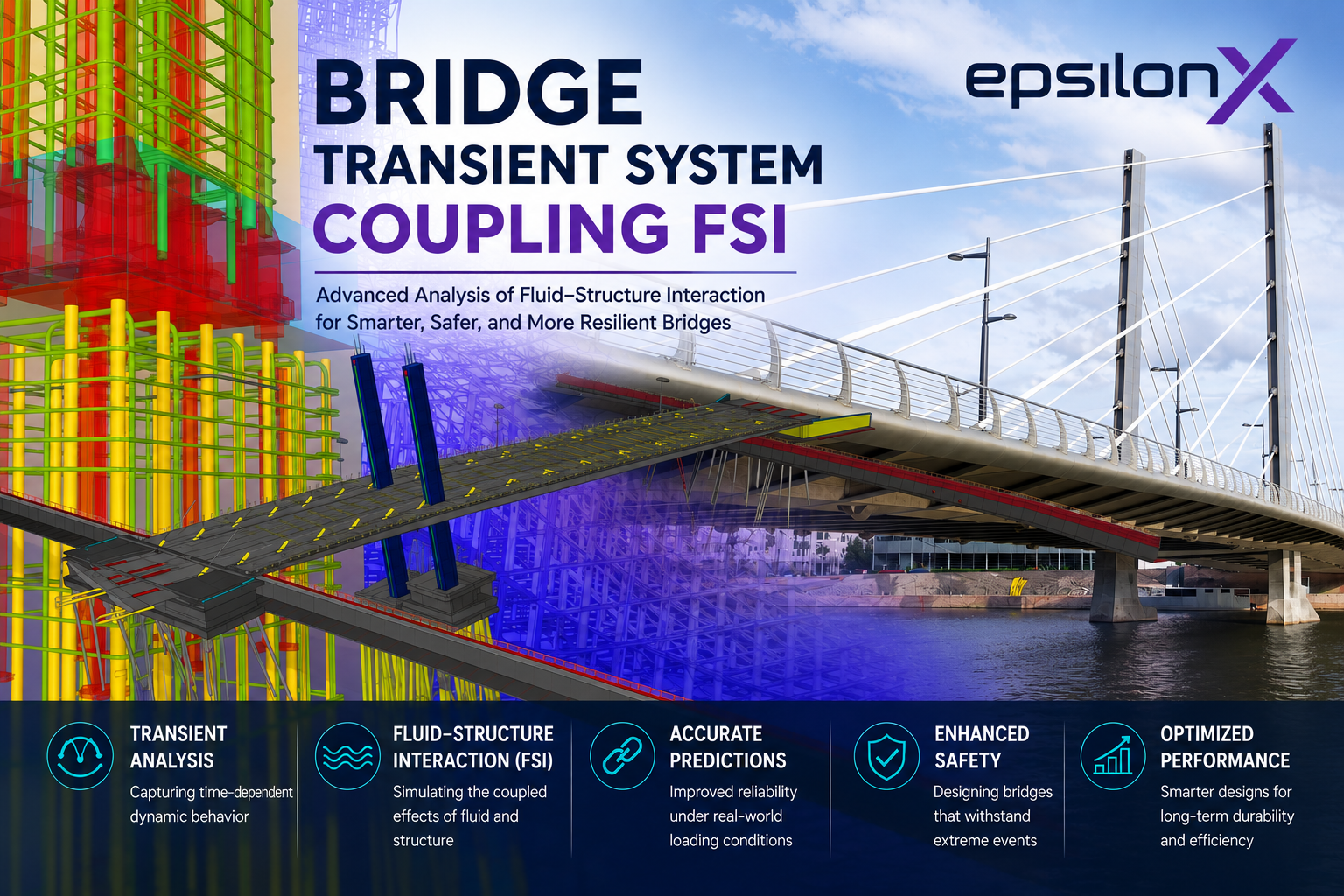
The Bridge Transient System Coupling FSI project provides a structural engineering application centered on transient coupled simulation.
It offers an opportunity to explore how fluid loading and structural response can be investigated within a time-dependent simulation workflow.
The project complements Module 6 by connecting transient System Coupling concepts with a bridge-related engineering scenario.
Learners can develop a better understanding of how coupled analyses help engineers investigate the response of structural systems to changing physical conditions.
The project is particularly relevant to civil engineers, structural engineers, and simulation specialists interested in advanced coupled analysis.
It provides a focused learning resource for exploring the relationship between fluid forces, structural behavior, and transient simulation methods.
Project Option Two: FSI Wing Sustainability Study
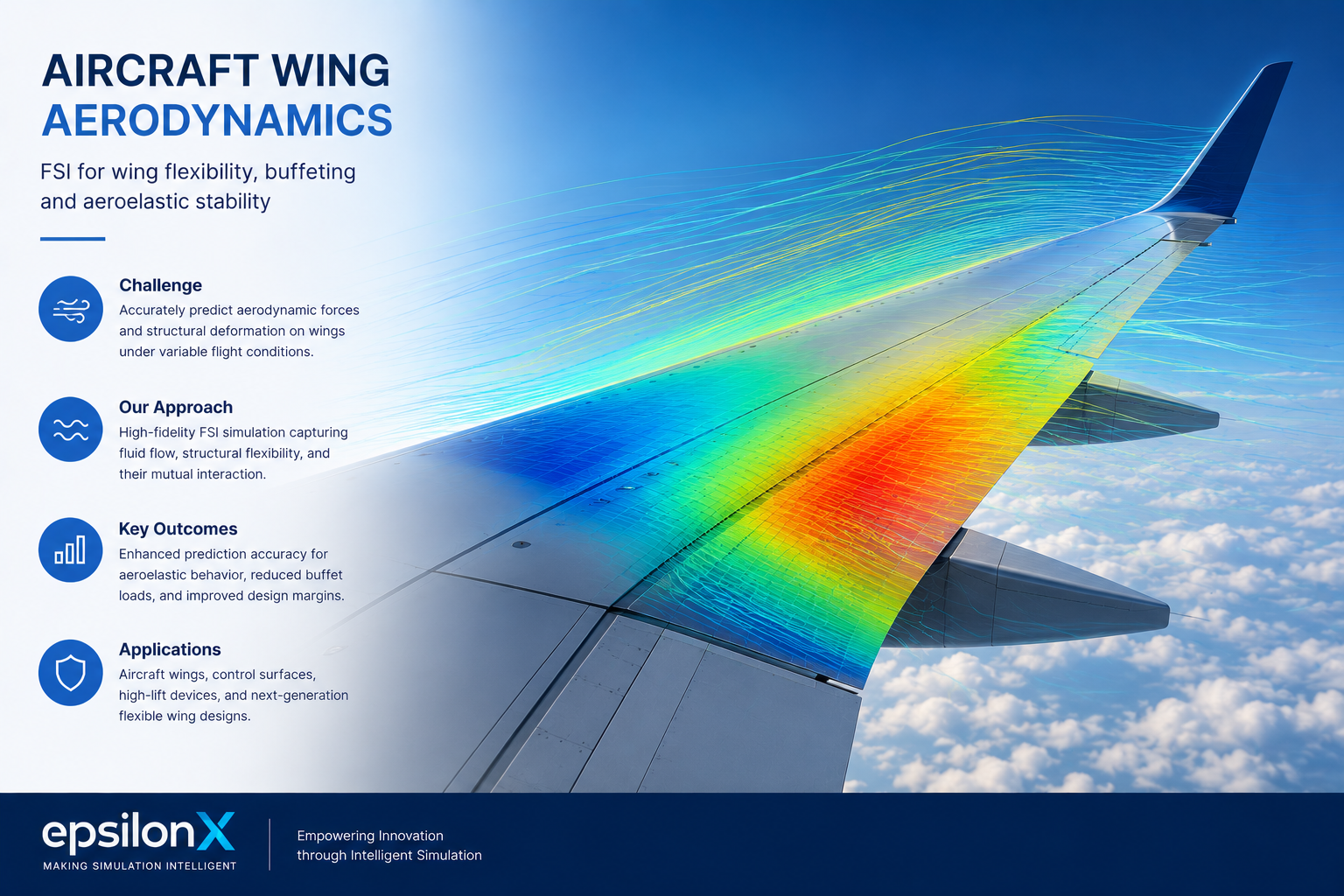
The FSI Wing Sustainability Study offers an alternative application for learners interested in aerospace engineering and wing-related simulation challenges.
The project explores the relationship between aerodynamic loading and structural response within an FSI context.
It provides a way to connect fluid mechanics with structural analysis while considering the interaction between airflow and an aircraft wing.
Learners can investigate the value of coupled simulation when evaluating aerospace engineering concepts involving fluid and structural behavior.
The project complements Module 6 by extending the study of FSI into an aerospace-oriented application.
It is particularly suitable for aerospace engineers, mechanical engineers, and researchers interested in aerodynamic and structural interactions.
What Makes This Bundle Valuable?
This bundle connects specialized FSI training with a practical project instead of treating course learning and engineering application as separate activities.
It helps learners build a clearer understanding of how fluid mechanics and structural mechanics interact within complex engineering systems.
The combination supports a more comprehensive learning experience, from understanding coupled simulation principles to exploring an application-specific workflow.
Engineers can use the knowledge gained to strengthen their understanding of multiphysics modeling and numerical simulation.
The bundle is relevant to civil, structural, mechanical, and aerospace engineering applications involving fluid and structural interactions.
It can also support engineering students and researchers who want to broaden their knowledge of advanced simulation techniques.
The choice between a bridge project and a wing project allows learners to focus on the application most relevant to their technical interests.
Choose Your FSI Learning Path
Choose the Bridge Transient System Coupling FSI project if your interests focus on bridge-related applications and transient structural response.
Choose the FSI Wing Sustainability Study if you prefer an aerospace-oriented application involving aerodynamic loading and structural behavior.
Both options complement Module 6 and provide a practical direction for exploring Fluid–Structure Interaction.
Advance Your Engineering Simulation Skills
Explore the relationship between fluid flow and structural mechanics through the Epsilon X Sky Fluid–Structure Interaction Bundle.
Strengthen your simulation knowledge, explore a practical engineering case, and develop a deeper understanding of coupled multiphysics analysis.
Explore the bundle today and take the next step in your engineering simulation journey.
Epsilon X Sky — Engineering Simulation. Analysis. Optimization.